Why Your Business Needs a Modern Website in 2026
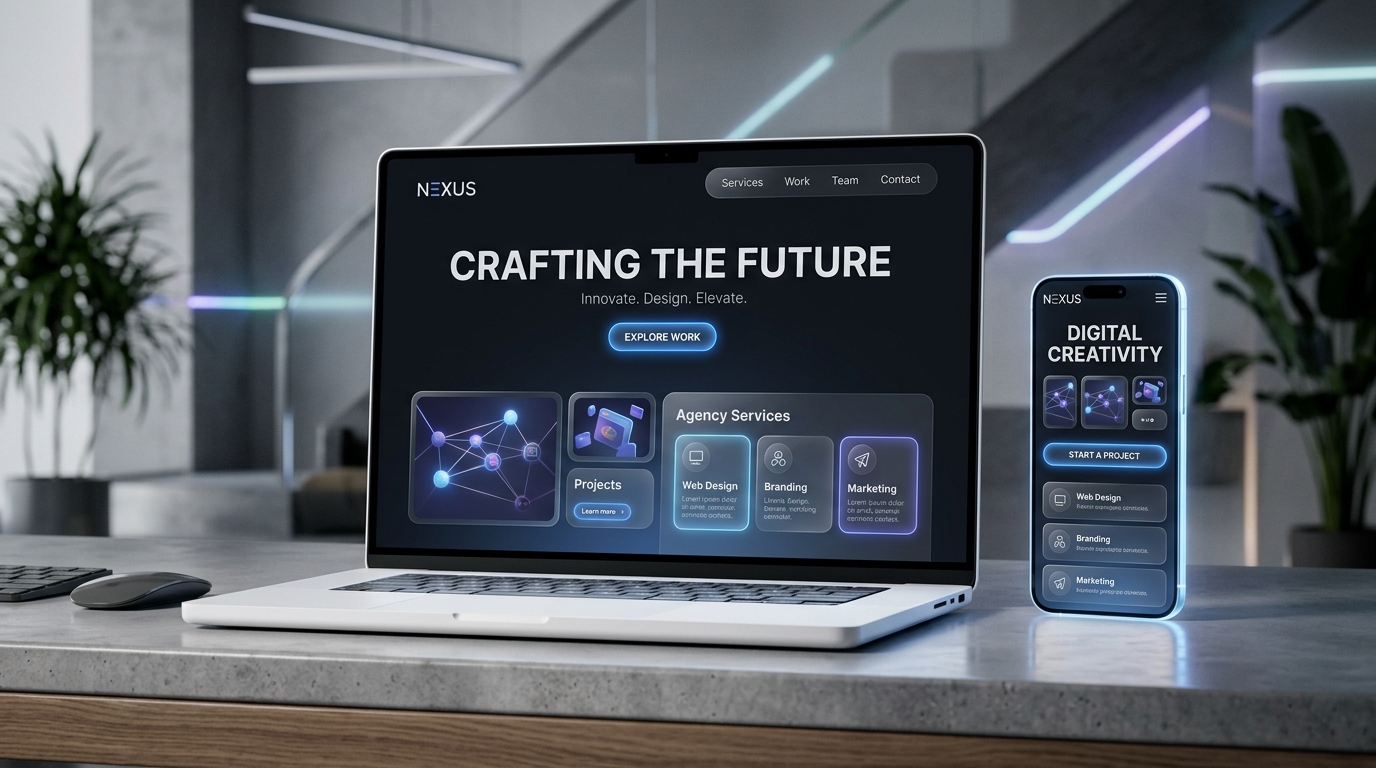
Your website is usually the first place a potential customer meets your business, and they decide within seconds whether you look credible. A modern website for business is no longer a nice-to-have. It shapes your reputation, your search visibility, and your sales all at once.
This guide covers what makes a website modern, why your business needs one in 2026, and how to upgrade without losing the traffic you already have. If you want experts to handle it, our web design and development services are built for exactly this.
What Is a Modern Website?
A modern website is fast, mobile-friendly, secure, accessible, and search-ready, and it is built around a clear business goal. Appearance matters, but it is only one part. A site can look current and still load slowly, break on phones, or leave visitors unsure what to do next.
Modern Website vs Outdated Website
| Area | Outdated Website | Modern Website |
|---|---|---|
| Mobile experience | Pinch-and-zoom layouts and tiny buttons | Responsive design that works on every screen |
| Speed | Heavy images and slow loading | Optimized assets and fast loading |
| Design | Template look and cluttered pages | Clear hierarchy and purposeful motion |
| Security | No HTTPS or unmaintained software | HTTPS and regularly updated code |
| Accessibility | Low contrast and missing alt text | Built to follow WCAG guidelines |
| SEO | Weak structure and thin metadata | Clean headings, schema, and crawlable pages |
| Conversion | Contact options buried in the footer | Clear calls to action and tracking |
Signs Your Website Is Outdated
- Pages take several seconds to load on a phone
- The layout breaks or needs zooming on mobile screens
- Browsers warn visitors that your site is "Not secure"
- Small content changes require a developer
- You get traffic but very few enquiries
- Your design looks noticeably older than your competitors' sites
- Text is hard to read, forms lack labels, or images lack descriptions
If several of these sound familiar, a proper audit is worth your time.
Why Your Business Needs a Modern Website
1. A Modern Website Builds Trust Before You Say a Word
People judge a business by its website long before they speak to anyone. Clean design, clear messaging, and a polished experience signal that you are professional and active. A dated site does the opposite, raising quiet doubts about whether you are reliable or even still operating.
Consistent branding across every page
Trust also comes from consistency. Matching logo, color, typography, and tone on every page make your business feel deliberate. Our branding, animation and design team builds these systems so your site and your marketing look like one brand.
2. A Fast Website Keeps Visitors From Leaving
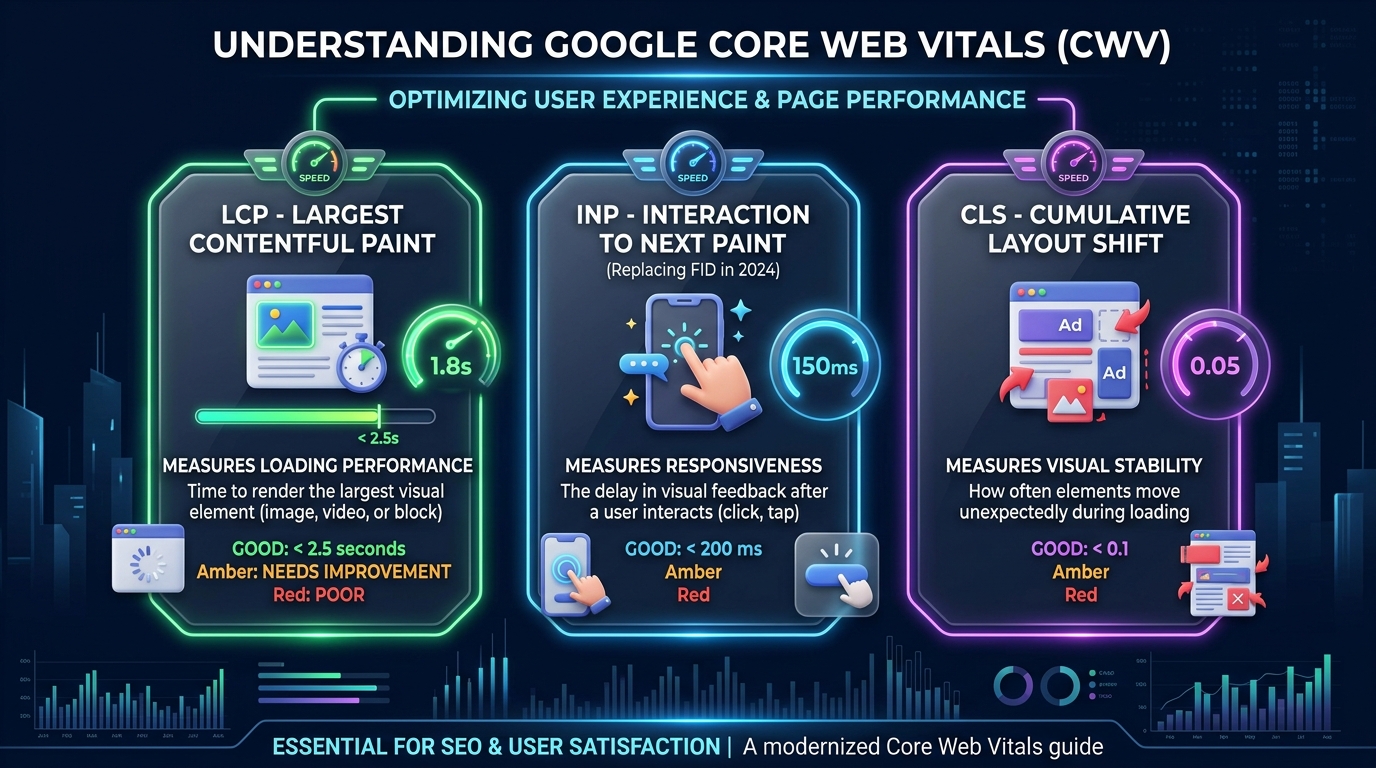
Speed shapes how people feel about your business. Google measures page experience with three Core Web Vitals: Largest Contentful Paint for loading, Interaction to Next Paint for responsiveness, and Cumulative Layout Shift for visual stability. Google defines "good" thresholds for each, measured at the 75th percentile of real visits.
| Core Web Vital | What it measures | Good score |
|---|---|---|
| Largest Contentful Paint (LCP) | How quickly the main content loads | 2.5 seconds or less |
| Interaction to Next Paint (INP) | How fast the page responds to clicks and taps | 200 milliseconds or less |
| Cumulative Layout Shift (CLS) | How much the layout jumps while loading | 0.1 or less |
A realistic note: Google treats Core Web Vitals as one signal among many, so speed will not rescue weak content. Still, a slow site frustrates visitors and costs enquiries whether or not it affects ranking, which is reason enough to fix it.
3. A Mobile-Friendly Website Matters to Google and Customers
Most people now browse on their phones, and Google follows them. Under mobile-first indexing, Google uses the mobile version of your pages for indexing and ranking. If your mobile site shows less content than your desktop site, Google warns you can lose traffic.
Responsive design is the safest approach
One responsive site that adapts to every screen is simpler to maintain and avoids the mismatches that separate mobile versions create. It is also the approach Google recommends for new websites.
4. It Gives Search Engines a Clear Map of Your Business
Search engines reward sites they can understand. A modern build gives each page one clear H1, logical subheadings, descriptive metadata, clean URLs, structured data, an XML sitemap, and meaningful internal links. These foundations are far cheaper to build in from the start than to patch onto an older site.
5. An Accessible Website Reaches More People
Accessibility is where most of the web still falls short. The 2026 WebAIM Million report found detectable WCAG 2 failures on 95.9% of the top one million home pages, with low-contrast text on 83.9% of them. Fixing basics such as contrast, image descriptions, and form labels widens your audience and usually makes the site easier for everyone. This is general information, not legal advice.
Quick accessibility wins
- Use strong color contrast for text and buttons
- Add descriptive alt text to meaningful images
- Label every form field
- Make sure the site works with a keyboard
- Respect reduced-motion settings for animation
6. A Modern Website Turns Visitors Into Customers
Traffic only matters if it leads somewhere. Modern sites are designed around actions: a clear message above the fold, obvious calls to action, short forms, visible proof such as reviews or case studies, and analytics that show where visitors drop off. Thoughtful motion can also guide attention to what matters. See how in our guide to website animation services.
7. It Keeps Your Business Secure
Outdated software is a common way attackers get in. Modern sites use HTTPS, maintained frameworks, and up-to-date dependencies, and they run on infrastructure that is monitored and automated. Good hosting also controls cost, as we explain in Why DevOps and Cost Optimization is Your Highest-Margin Dev Decision.
8. It Grows With Your Business
A modern architecture connects cleanly to payments, CRMs, analytics, and mobile apps, so adding a feature does not mean rebuilding the site.
Ready for AI assistants and personalization
Chat assistants, smart search, and personalized recommendations all need a solid technical base. If AI is on your roadmap, read How AI Solutions Are Transforming the Web Development Landscape and explore our AI integration services.
What a Modern Website Should Include
Must-Have Features
- Responsive layout that works on every device
- Fast loading pages with optimized images
- HTTPS and secure hosting
- Clear navigation and a simple, focused message
- Prominent calls to action and easy contact options
- SEO foundations: headings, metadata, sitemap, and schema
- Accessibility basics
- Analytics and conversion tracking
- An easy way for your team to update content
Features That Help You Stand Out
- Animated interfaces and scroll effects that guide attention
- 3D and interactive experiences for products that benefit from them
- Explainer videos that make complex offers clear
- AI chat assistants that answer questions from your own content
- Headless commerce for flexible, fast online stores
The Hidden Cost of Keeping an Outdated Website
Most of the cost of an old website never appears on an invoice, which is why it is easy to ignore.
- Lost leads: visitors leave when pages are slow, confusing, or hard to use on a phone.
- Wasted marketing spend: ads and SEO send people to a site that fails to convert them.
- Weaker credibility: a dated look suggests a dated business.
- Rising maintenance: patching old code often costs more over time than rebuilding properly.
- Competitors pulling ahead: a better site wins the comparison before you get a chance to compete.
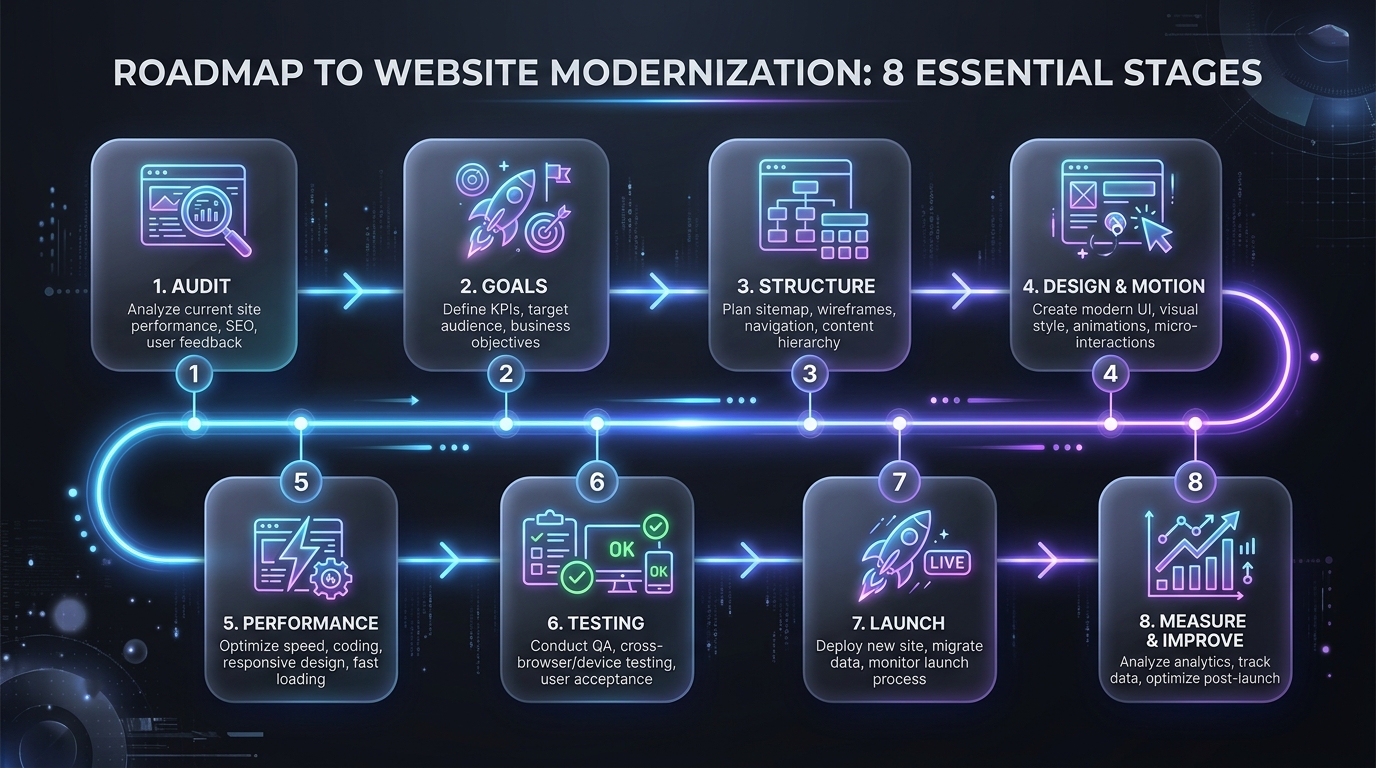
How to Modernize Your Website: A Step-by-Step Plan
- Audit your current site: check speed, mobile experience, accessibility, SEO, and analytics so you know the real starting point.
- Define your goals: decide what visitors should do, such as book a call, request a quote, or buy.
- Plan structure and content: map pages, keywords, and a redirect plan for every old URL.
- Design with your brand and motion in mind: create a consistent visual system and decide where animation adds value.
- Build for performance: use clean code, optimized images, and lightweight animation.
- Test thoroughly: check real phones, Core Web Vitals, and accessibility before launch.
- Launch carefully: apply redirects, submit your sitemap in Google Search Console, and monitor indexing.
- Measure and improve: use analytics to refine pages after launch.
Will a Website Redesign Hurt My SEO?
Not if it is planned. Problems usually come from changing URLs without redirects, dropping pages that earn traffic, or losing metadata. Keep your best content, redirect old URLs permanently to their new equivalents, preserve titles and descriptions where they work, and watch Search Console closely after launch.
Frequently Asked Questions About Modern Websites
Why does my business need a modern website?
Because your website shapes trust, search visibility, and sales. A modern site loads fast, works on every device, is accessible, and is built to turn visitors into customers.
How often should you redesign your website?
There is no fixed rule. Many businesses review their site every two to three years as a guide, but let performance data and business goals decide, and act sooner if the site feels slow, dated, or hard to update.
Does a new website improve SEO?
It can, when it is faster, mobile-friendly, well structured, and launched with proper redirects. A redesign alone does not guarantee better rankings, but a modern foundation makes them much easier to earn.
How much does a modern website cost?
Cost depends on the number of pages, custom design and animation, integrations, and features such as e-commerce or AI. A short scoping conversation gives you a clear quote.
What is the difference between a template and a custom website?
Templates are quicker and cheaper but look like many other sites and carry code you do not need. Custom websites are built around your brand and goals, with cleaner performance and more flexibility.
How long does it take to build a modern website?
It depends on size and complexity. A small brochure site moves much faster than a large site with custom animation and integrations, and a realistic schedule is confirmed once scope is clear.
Final Thoughts: Is Your Website Working as Hard as You Are?
Your website works every hour of every day, introducing your business to people you will never meet in person. A modern website for business makes that introduction fast, trustworthy, accessible, and persuasive. An outdated one quietly sends customers elsewhere.
The good news is that modernizing does not have to mean starting over. With a clear audit, a plan, and the right team, you can upgrade what holds you back and keep what already works.
Ready to see what a modern website could do for your business?
Explore our web design and development services, branding and animation, and app development to see how TecWrites can help.
Book Your Free Discovery Call arrow_forward